In maths, we have been enquiring into the following central idea:
If you are interested in seeing some samples of the types of maths learning we have been doing in class of late, below are some blog posts. Please bare in mind, these posts are written with a 'teacher audience' perspective.
Investigating Polygons with the same area, but different perimeter
Students create own strategies to measure area of polygons
Real life maths: Children measure the area and perimeter of their homes
Children create perimeter ratio maps of their own countries
Thursday, 14 January 2016
Unit of Inquiry: Organisations allow people to come together to take action
Today, we held a mock United Nations meeting to try to help resolve the real life conflict of damming the Mekong River.
This helped us to understand the frustrations and difficulties an organisation like the United Nations experiences when trying to help resolve international conflicts.
The children were very knowledgeable and passionate in trying to persuade their points of view.
The link to our reflections with photos are on the link below:
Reflections Link: each student wrote two reflections so scroll down to the bottom to read the second lot
__________________________________________________
This afternoon, we had two guest speakers visit us from the NGO Humanian which takes action in developed countries to assist with communities meeting the Geneva Convention of the Rights of the Child.
During this, we learnt about what the Rights of the Child are and ways an NGO such as Humanian takes action.
This helped us to understand the frustrations and difficulties an organisation like the United Nations experiences when trying to help resolve international conflicts.
The children were very knowledgeable and passionate in trying to persuade their points of view.
The link to our reflections with photos are on the link below:
Reflections Link: each student wrote two reflections so scroll down to the bottom to read the second lot
__________________________________________________
This afternoon, we had two guest speakers visit us from the NGO Humanian which takes action in developed countries to assist with communities meeting the Geneva Convention of the Rights of the Child.
During this, we learnt about what the Rights of the Child are and ways an NGO such as Humanian takes action.
Some of us felt inspired by one of the guest speakers who told us the reason he decided to work for this NGO was because when he was 11 years old, he heard how 40 000 children under 5 years were dying in the world daily and he wanted to take action to help combat that. Today that figure stands at approximately 19 000. In our class discussion, we were in two minds about that. On the one hand, we were glad the figure had more than halved but on the other, it is still an incredible amount of children.
_______________________________________________________
As a lead in activity to what NGOs are, what they do and what their purpose is, we each selected two images of NGOs from the internet.
Using the image, we reflected on what we felt it helped us to understand what NGOs are and do.
We then shared our chosen images and read what others in our class perceived about NGOs.
Next week we still enquiring into NGOs in much more depth.....
_______________________________________________________________________
Tuesday, 5 January 2016
Unit of Inquiry- How we organise ourselves
Our new unit of inquiry explores the central idea:
Organisations allow people to come together to take action.
To help us investigate the central idea, we are using the following lines of inquiry:
FORM: different types of NGOs
FUNCTION / RESPONSIBILITY: roles and responsibilities within NGOs
FUNCTION / CAUSATION: the action NGOs take and why
REFLECTION: how we know if NGOs are effective or not
In our unit we will be finding out what the United Nations and NGOs are and what they do to take action in our world. Details about our excursion to Geneva where we will visit the U.N and the International Red Cross/Crescent museum will be sent home to you in a few weeks.
In the meantime, if you or anyone you know works with an NGO and would be willing to visit Year 6 as a guest speaker, could you please send me an email? Having guest speakers greatly deepens are inquiry and usually have a profound impact on our children's understandings.
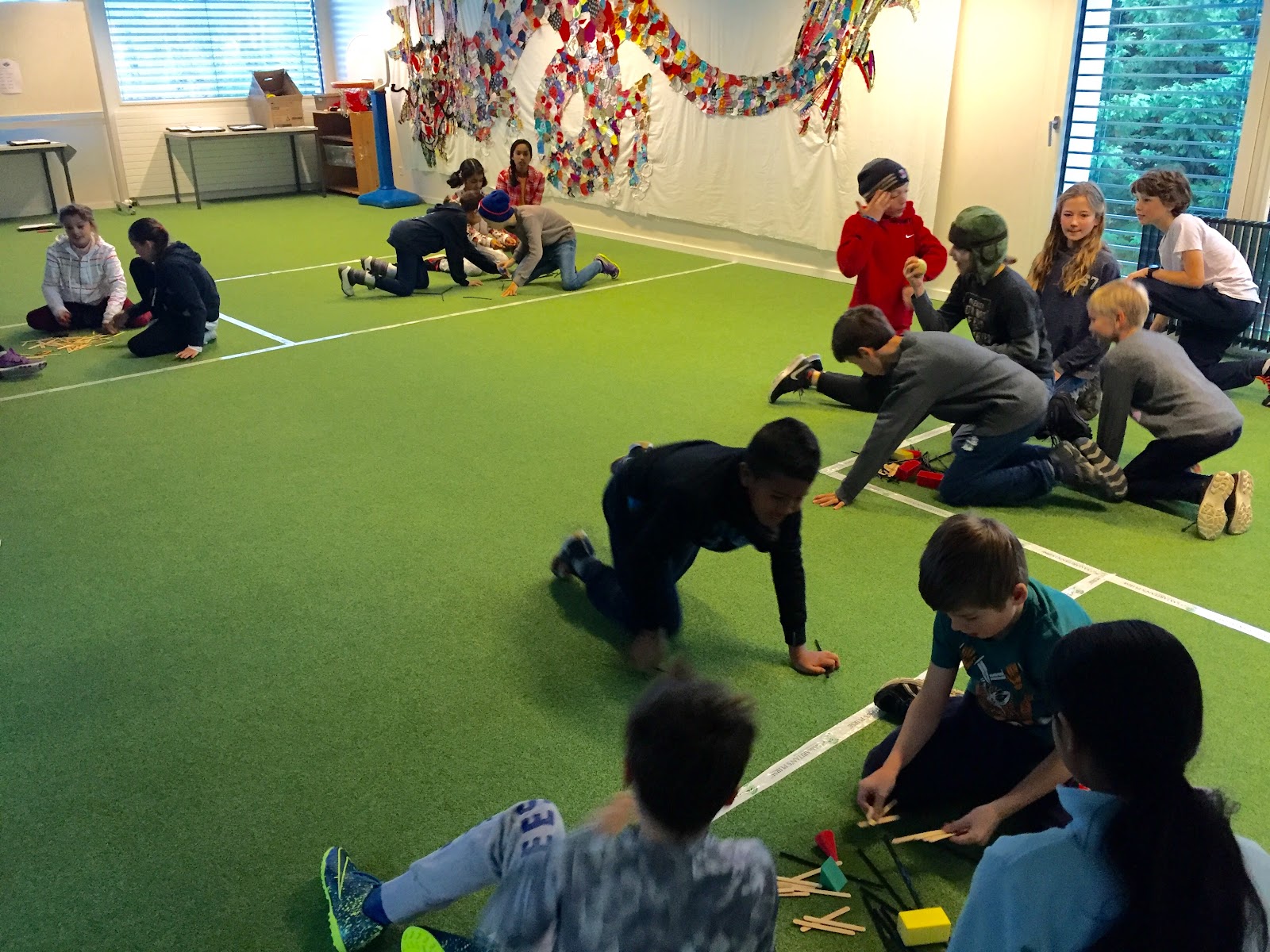
As a lead in provocation yesterday, we imagined we were small countries trying to develop by building a tower out of straws etc.
To read some of our reflections on what we learnt from this experience (and to see more photos) click on the link: Lead in Provocation Link
Literacy:
In literacy, we are focusing on persuasive language techniques and finding out how to write persuasive texts in writing.
In our reading programme, we are being encouraged to create a balance of reading/discussing books with a partner or a small group in class in addition to individual reading. Two great books have been recommended to the children to read during our unit which highlight true stories of people taking positive action in our world:

Maths:
In maths, our new unit is exploring the measurement of area and perimeter lengths. We will also be expanding upon skills related to multiplication and division for number.
Should you have any questions about our programme, please don't hesitate to ask.
Our new unit of inquiry explores the central idea:
Organisations allow people to come together to take action.
To help us investigate the central idea, we are using the following lines of inquiry:
FORM: different types of NGOs
FUNCTION / RESPONSIBILITY: roles and responsibilities within NGOs
FUNCTION / CAUSATION: the action NGOs take and why
REFLECTION: how we know if NGOs are effective or not
In our unit we will be finding out what the United Nations and NGOs are and what they do to take action in our world. Details about our excursion to Geneva where we will visit the U.N and the International Red Cross/Crescent museum will be sent home to you in a few weeks.
In the meantime, if you or anyone you know works with an NGO and would be willing to visit Year 6 as a guest speaker, could you please send me an email? Having guest speakers greatly deepens are inquiry and usually have a profound impact on our children's understandings.
As a lead in provocation yesterday, we imagined we were small countries trying to develop by building a tower out of straws etc.
To read some of our reflections on what we learnt from this experience (and to see more photos) click on the link: Lead in Provocation Link
Literacy:
In literacy, we are focusing on persuasive language techniques and finding out how to write persuasive texts in writing.
In our reading programme, we are being encouraged to create a balance of reading/discussing books with a partner or a small group in class in addition to individual reading. Two great books have been recommended to the children to read during our unit which highlight true stories of people taking positive action in our world:
Maths:
In maths, our new unit is exploring the measurement of area and perimeter lengths. We will also be expanding upon skills related to multiplication and division for number.
Should you have any questions about our programme, please don't hesitate to ask.
Friday, 30 October 2015
FORM: What are hormones and what do they do?
Central Idea:
Hormonal changes during puberty allow for the possibility of reproduction.
________________________________________________________________
This flowchart in our classroom shows the mini-enquiries we will be exploring during our unit to gain a deep understanding of our central idea:
Hormonal changes during puberty allow for the possibility of reproduction.
________________________________________________________________
This flowchart in our classroom shows the mini-enquiries we will be exploring during our unit to gain a deep understanding of our central idea:
We searched the internet to find interesting facts about cells and then sorted our findings:
Line of Inquiry: What hormones are and do
We learnt what hormones are and how they are responsible for transformation of a frog and a butterfly. We learnt how to create flowcharts in literacy and wrote explanation texts from reading we had done.
Reflecting on what we have learnt about hormones and what do we still want to learn about them?
Flexible Seating Proposal
We are trialling a new idea for learning in our classroom which we are calling flexible seating. Instead of having assigned seating arrangements, we now have the freedom and responsibility to select places and with classmates who will best have us to learn.
Studies repeatedly show that children should not be spending long periods of time seated at tables, so we have created standing tables for times during the day we want to stand and do a learning activity.
To help us with this proposal, we used the following visible thinking routine to discuss how we can make this successful:
How our flexible seating classroom looked today for our writing activity:
Thursday, 29 October 2015
FORM: What hormones are and do DRAMA
Central Idea:
Hormonal changes during puberty allow for the possibility of reproduction.
_________________________________________________________________________________
Our first line of inquiry to help us understand our central idea is:
FORM: What hormones are and do
To find out about hormones, this week we have been learning that hormones are chemical messengers to cells in living things. We read about the role hormones play in the transformation of a tadpole to a frog and also with the caterpillar-butterfly. To help solidify our understandings of hormones and to develop our creative skills, we created and performed some short plays that explain how hormones help to transform the caterpillar-butterfly.
Here are some of our scenes:
Monday, 26 October 2015
Unit of Inquiry: Who We Are
We are beginning our new unit of inquiry under the PYP Transdisciplinary Theme: Who We Are
Our central idea is:
Our lines of inquiry (help us to understand our central idea):
° Form: What hormones are and do
Our central idea is:
Hormonal changes during puberty allow for the possibility of reproduction.
Our lines of inquiry (help us to understand our central idea):
° Form: What hormones are and do
° Change: Physical and emotional changes from hormones
° Function: How humans reproduce
° Connection: How cells, hormones, puberty and human reproduction are connected
As mentioned during the parent-teacher evening, each week I will send you a fairly detailed email updating you on what we have learnt during the week and what we will be learning about in the next week to give you an opportunity to discuss with your child their understandings of changes they will experience during puberty and sexual reproduction.
This week, we are enquiring into what cells and hormones are by looking at the role hormones play in the transformation of tadpoles to frogs and caterpillars to butterflies. By understanding what hormones do in bodies, next week we can take our understanding further by enquiring into the endocrine system.
The following 2 weeks, we will learn begin enquiring into the physical and emotional changes hormones create in the human body during puberty (The PE teachers will be focusing on social changes that may occur during puberty).
After learning about how puberty prepares the body for the possibility of reproduction, we then will enquire into the sexual reproduction systems and the following week how babies are created and develop in the womb.
The final weeks of the unit are open to children to enquire into topics of their own interest related to the central idea.
Throughout the unit, should you have any questions, please don't hesitate to ask.
In literacy, we are focusing on the reading strategy: Determining Importance
Our writing focus is explanation text writing.
In maths, we have begun our unit enquiring into the central idea:
Subscribe to:
Posts (Atom)